


Covert to Overt: Contrasts between Chile and Venezuela
By Evander McElroy

Early on January 3rd, 2026, U.S. special ops forces entered Caracas and detained Venezuelan president Nicolás Maduro and his wife, Cilia Flores. Within hours, they were on a U.S. aircraft bound for American custody. Federal prosecutors charged Maduro with leading a narcotics trafficking conspiracy that allegedly used the machinery of the Venezuelan state to move cocaine into North America.¹ Washington called the mission a law-enforcement action made necessary by a corrupt government unwilling to police itself. To some this was justification enough, but when foreign troops enter a sovereign capital and remove its president, the act cannot be reduced to an arrest. It’s a kidnapping.

Watching this event play out in real time brought me back to an event that I learned about in school, the 1973 Chilean coup d’état that ousted and led to the death of the first democratically elected Marxist leader in the western hemisphere, Salvador Allende.2 While the United States did not send troops into Santiago, declassified documents later confirmed sustained efforts to weaken Allende’s government through economic pressure and covert political operations before General Augusto Pinochet was brought to power.²
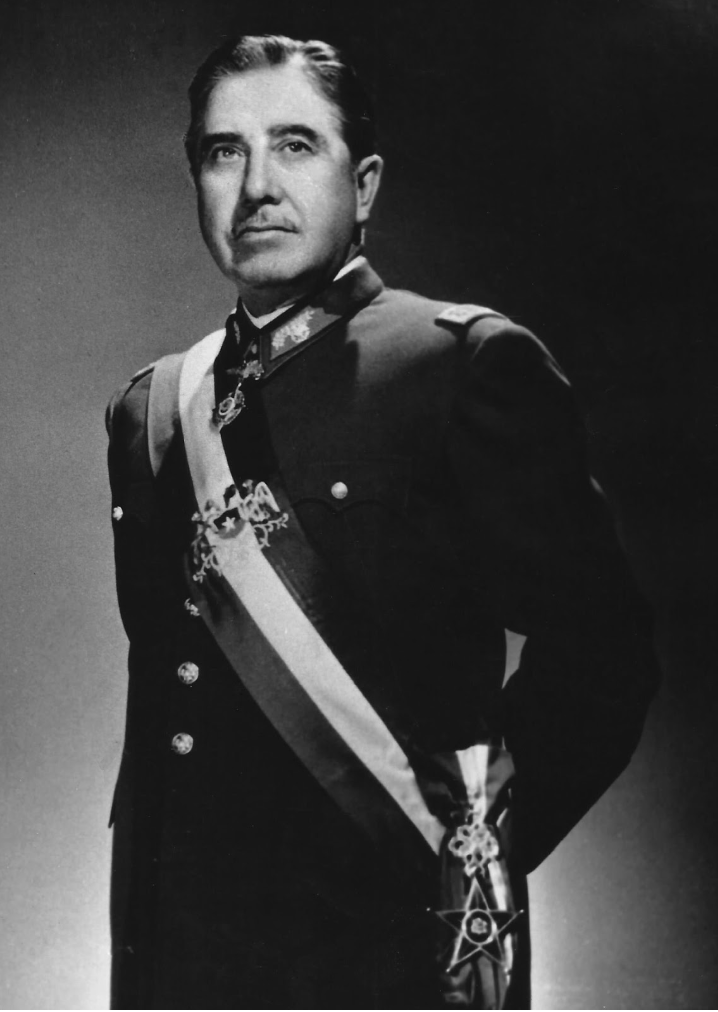
Washington saw Chile as they saw lots of left wing countries in the early 1970s- through the lens of the Cold War. Allende’s socialist reforms and his decision to nationalize the country’s copper industry convinced U.S. officials that Chile might slip into the Soviet orbit. This sort of back-door shadow manipulation was framed as containment! Stopping communism before it spread to other nations of the western hemisphere. Unfortunately what followed was not a strategic shift, but years of fear. Under Pinochet’s seventeen-year rule, people were detained in the night, tortured in secret prisons, and “disappeared” without explanation.³ Families searched for answers that often never came. Whatever anxieties existed in Washington about geopolitics, the consequences in Chile were measured in broken families.
Venezuela in 2026 was defended under a different banner. This time, the language was not about communism but about crime. U.S. leaders pointed to indictments accusing Maduro of protecting drug trafficking networks, manipulating elections, and silencing political opponents.¹ Meanwhile, ordinary Venezuelans were living through rolling blackouts, empty grocery shelves, and an economy so broken that millions packed up and left their homes in search of stability. These are not minor accusations or distant policy debates as they reflect real suffering and real anger. But recognizing that reality does not automatically settle the question on whether a foreign military has the right to directly intervene in another nation's sovereign affairs!

To echo something I brought up before, the United States has repeatedly revised the language it uses to justify its repeated interventions. In one era it was stopping communism. In another, promoting democracy. Later, fighting terrorism. Now, combating drug trafficking. Each justification reflects the dominant fear of its moment. Each presents action as reluctant but necessary. The continuity lies not in ideology, but in the willingness to violate another nation’s sovereignty when Washington concludes the stakes are high enough.
The 2026 operation made that continuity clear. Unlike Chile, where U.S. influence operated largely in the shadows, American forces entered Venezuelan territory directly and removed a sitting head of state and first lady under armed guard.¹ The symbolism matters: it signals that the United States feels that it has the right to enforce its judgments beyond its borders.
International law is supposed to be a guardrail. The United Nations Charter bars countries from using force against the political independence of another state.⁴ Supporters of the 2026 operation argue that sovereignty should not protect leaders accused of turning their governments into criminal enterprises. Critics counter that when the strongest countries reserve the right to determine who deserves sovereignty, the promise of equal protection under international law begins to fade.
There’s something that has to be made very clear though! Pinochet’s crimes were undeniable.³ Maduro’s government faced grave accusations. The issue is not whether these leaders were flawed or abusive. The issue is precedent. When the United States acts as investigator, judge, and enforcer across borders, it reshapes the norms it claims to defend.
From Santiago in 1973 to Caracas in 2026, the vocabulary has changed, but the pattern remains. If security concerns can justify military intervention, sovereignty becomes conditional. And conditional sovereignty, history suggests, is a standard applied unevenly.
That is the legacy these moments force us to confront.
FOOTNOTES
U.S. Department of Defense, “Statement on Operation Absolute Resolve,” January 3, 2026; U.S. Department of Justice, indictment filings against Nicolás Maduro, 2020–2026.
U.S. Department of State, Foreign Relations of the United States, 1969–1976, Volume XXI: Chile, 1969–1973; Central Intelligence Agency, “CIA Activities in Chile,” declassified memorandum, 1975.
National Commission on Truth and Reconciliation (Chile), Rettig Report, 1991.
United Nations, Charter of the United Nations, art. 2(4), 1945.


Honestly, Drift Boss is a great example of how simple mechanics can still create a really fun experience. Perfect for quick sessions when you don’t want to commit to something long.